The Short Answer
A standard Texas homeowners policy covers water damage that is sudden and accidental. It does not cover water damage that is gradual, expected, or caused by flooding.
That single distinction decides most claims. A supply line that splits at 2am and soaks the hallway is covered. The same hallway soaked slowly over eight months by a drip under the dishwasher is usually not — because the carrier will argue you should have noticed.
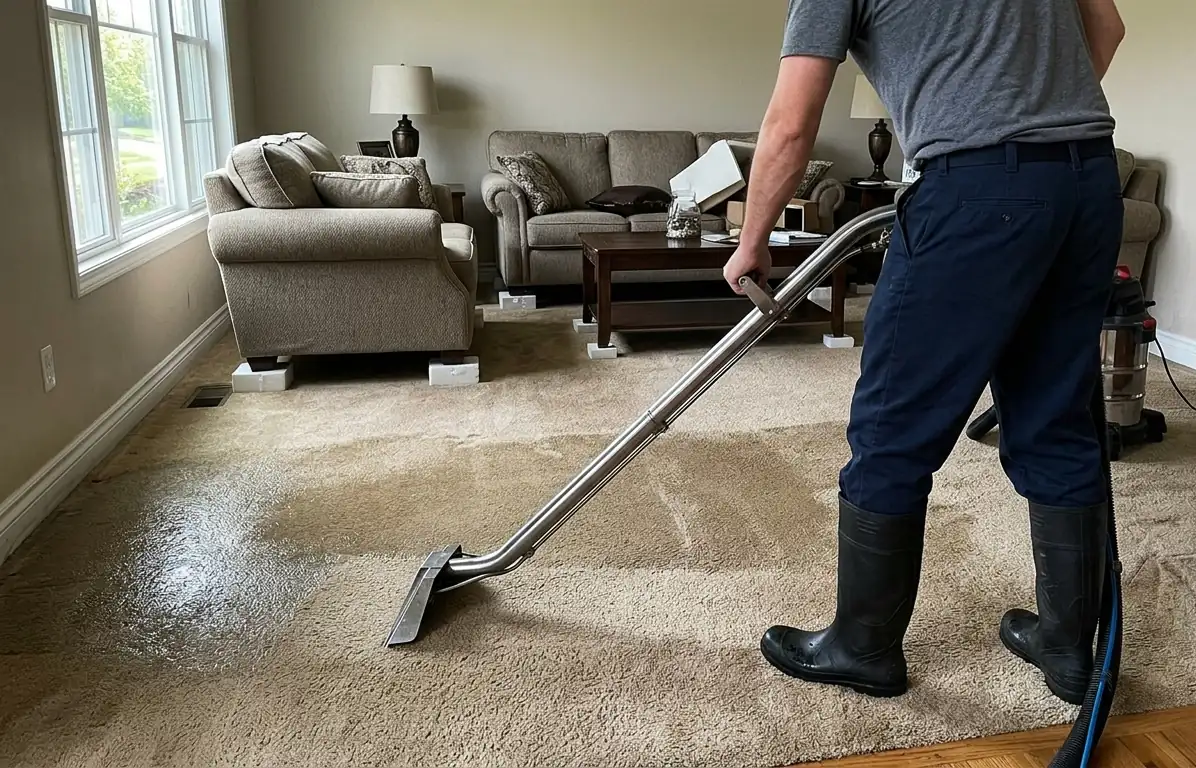
What “Sudden and Accidental” Actually Covers
These losses are covered under most Texas HO-3 and similar forms:
- Burst or frozen supply lines. The January freeze events that split uninsulated garage and attic pipes across Central Texas are textbook covered losses.
- Water heater failure. A tank that lets go and empties forty gallons into the floor.
- Appliance discharge. Washing machine hoses, dishwasher supply lines, ice maker lines — the small braided connectors that fail without warning.
- Plumbing backups, if you carry the water backup endorsement. This is often a separate add-on rather than part of the base policy.
- Roof leaks from storm damage, when wind or hail opened the roof first.
What Texas Policies Exclude
- Flooding. Rising water, creek overflow, storm surge, and surface water are excluded from every standard homeowners policy in the country. Covering that requires a separate NFIP or private flood policy.
- Gradual seepage. Long-term leaks, “continuous or repeated seepage,” and anything the policy considers a maintenance failure.
- Wear and tear. Corroded galvanized pipe that finally gave out after fifty years is a maintenance issue in the carrier’s view.
- Ground water and foundation seepage entering through the slab or walls.
- Damage while the home sits vacant, in many forms, beyond a stated number of days.
Mold Coverage Is a Separate Question in Texas
Texas has its own history here. After the mold claim surge of 2001–2002, the Texas Department of Insurance permitted carriers to limit or exclude mold coverage, and most policies written in Texas today cap mold remediation at a fixed dollar amount — frequently far below the cost of a whole-house remediation — unless you have purchased buy-back coverage.
The practical consequence: the water extraction and structural drying after a burst pipe may be fully covered, while mold that grows because drying was delayed hits a separate, much smaller sublimit. That is the financial argument for drying immediately rather than waiting on an adjuster. Mold can begin within 24 to 48 hours.
Flood Is Never Covered by a Homeowners Policy
Worth stating on its own because it surprises people every storm season. If water came from Gilleland Creek, from street runoff, or from ground saturation during a heavy rain, a homeowners policy does not pay. NFIP policies carry a 30-day waiting period, so buying one after the forecast turns is not an option.
Documenting a Claim So It Gets Paid
The claim is largely won or lost in the first two hours, before anyone from the insurance company arrives.
- Stop the water. Shut off the main. Mitigation is your contractual duty — carriers can reduce payment for damage that spread because you did nothing.
- Photograph and video everything before touching it. Wide shots of each room, close shots of the source, standing water depth against a baseboard, the failed component itself. Timestamps matter.
- Do not throw anything away. Damaged materials are evidence. Photograph and set aside rather than hauling to the curb.
- Call the carrier the same day, even with an incomplete picture.
- Keep daily moisture logs. A restoration crew documents moisture readings each day of drying. Adjusters expect that record and question invoices without it.
- Save every receipt, including hotel and meals if the home is unlivable — additional living expense is a real line item on most policies.
When a Claim Gets Denied
Denials usually rest on one of three claims: the damage was gradual, the damage was flood, or you failed to mitigate. All three are arguable, and all three are easier to argue with photographs taken before cleanup started.
You can request the adjuster’s report, get an independent assessment, and file a complaint with the Texas Department of Insurance. Public adjusters work on contingency and are worth considering on large losses.
This is general information about how Texas policies typically work, not insurance or legal advice. Coverage depends on your specific policy form and endorsements — read your declarations page and talk to your agent or a licensed public adjuster about your situation.
Want someone to look at your specific situation?
Send the short version and a local restoration pro will come back to you with a straight answer — no obligation, no call-centre runaround.
Emergency instead? Call (737) 210-8610 — answered 24/7.
Frequently Asked Questions
+ Does homeowners insurance cover a slab leak in Texas?
Usually the water damage is covered but the pipe repair is not. Most Texas policies pay to tear out the slab or wall to reach the failed line and to dry and rebuild what got wet, while treating the pipe itself as a maintenance item. Read the 'tear-out' or 'access' language in your policy — that clause is what pays for the concrete work.
+ How long do I have to file a water damage claim in Texas?
Policies require 'prompt' notice, and Texas Insurance Code Chapter 542 sets deadlines for the insurer once you file. Waiting weeks gives the carrier an argument that delay caused extra damage. Call it in the same day you find it, even before you know the full scope.
+ Will filing a water damage claim raise my premium?
It can, and multiple claims in a short window matter more than one. That said, paying out of pocket for a large loss to protect a premium rarely pencils out. Get the extraction and drying started immediately either way — cost of delay outruns the premium difference fast.
More Guides
Need help in Pflugerville right now?
Talk to a live person, not a call center. Free estimates for Pflugerville and surrounding areas.
Call (737) 210-8610