Why Texas Regulates This at All
Texas wrote mold rules after the claims crisis of the early 2000s, when unlicensed operators and inconsistent methods turned mold into an expensive, litigated mess for homeowners and insurers alike. The framework that came out of it — the Texas Mold Assessment and Remediation Rules (TMARR) — is genuinely protective of homeowners, and most people affected by it have never heard of it.
If you have visible mold in a Pflugerville home and you are about to hire someone, these rules decide who is legally allowed to do the work.
The 25 Square Foot Threshold
The rules turn on a single number: 25 contiguous square feet of mold growth.
Below 25 square feet, a property owner may address the problem without licensed professionals. A patch of growth on bathroom drywall after a shower leak generally sits here.
At or above 25 contiguous square feet, the work falls under the licensing framework, and two separate licensed parties are required.
The word doing the heavy lifting is contiguous. It is not the visible patch on the surface — it is the affected area counted together, including what is growing inside the wall cavity behind it. A stain the size of a dinner plate on the outside of a wall routinely turns into thirty or forty square feet once the drywall comes off. This is the single most common reason a job people expected to handle themselves turns into a licensed project.
Two Companies, Not One
This is the part that protects you most, and the part unlicensed operators quietly ignore.
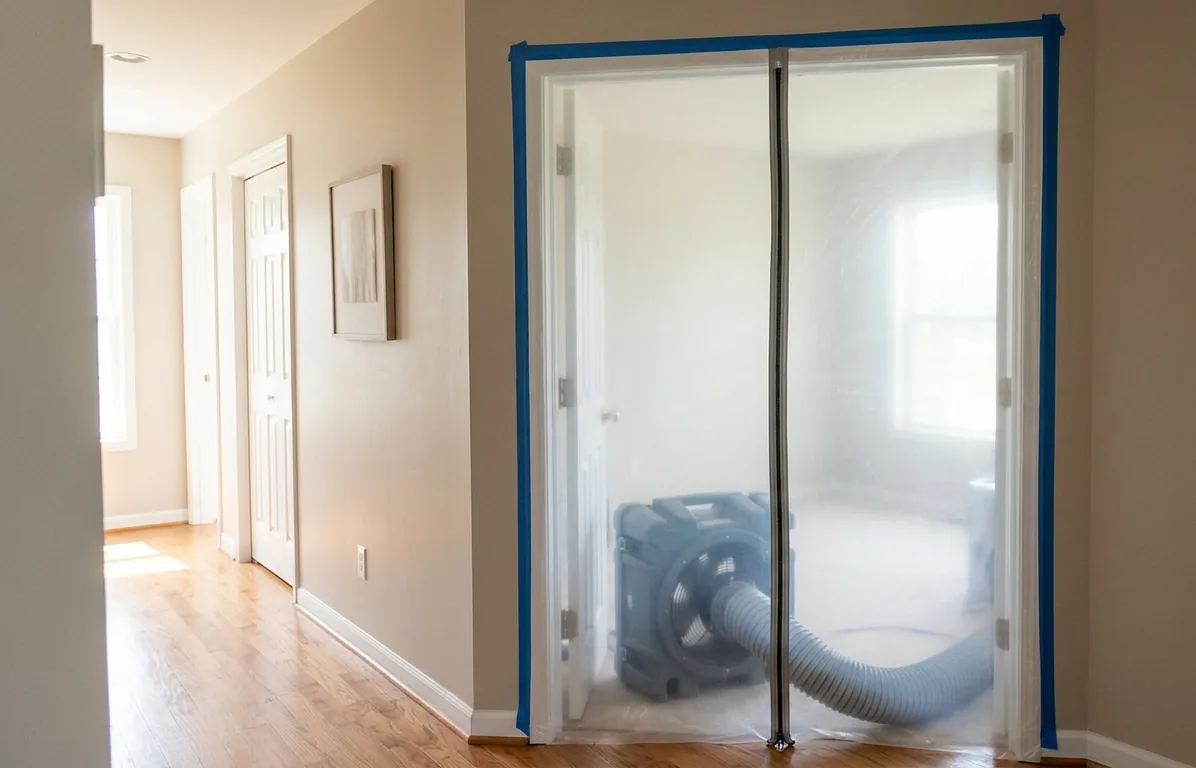
The licensed mold assessment consultant inspects the property, determines the extent of growth, identifies the moisture source, and writes a remediation protocol — the scope document that says what has to be removed, how containment is built, and what “finished” looks like.
The licensed mold remediation contractor executes that protocol.
These must be independent of each other. The state does not allow the company that defines the scope to also be the company paid to perform it, for an obvious reason: the party writing the scope has a financial incentive to inflate it, and no incentive to declare the job finished.
So if someone offers to test your home and then remove whatever they find, they are either describing work below the licensed threshold or describing an arrangement Texas does not permit. That offer is the clearest signal available that you are talking to the wrong company.
After the work, the assessor returns for clearance testing — an independent verification that the air and surfaces meet the protocol’s standard before containment comes down. The remediator does not grade their own homework.
The Certificate You Will Need Later
When licensed remediation is complete, the property owner receives a Certificate of Mold Damage Remediation (CMDR), issued within a short statutory window after completion.
Most homeowners file it and forget it. Two reasons not to:
Selling the house. If licensed remediation was performed, you are required to pass the certificate to the buyer. This is the difference between “there was mold once and here is the licensed documentation that it was properly removed and verified” and a disclosure that invites the buyer to assume the worst.
Insurance. Texas law limits an insurer’s ability to deny coverage based solely on previous mold damage where a certificate documents that the property was properly remediated. Without the certificate, prior mold is simply a risk factor on your record.
What This Means When You Are Hiring
Ask four questions before anyone starts work:
- Is this job above or below 25 contiguous square feet — and how did you determine that without opening the wall?
- Who is writing the protocol, and are they a separate licensed company from the one doing the removal?
- What is the moisture source, and what is the plan to fix it? Mold is a water problem wearing a costume. Remediation without fixing the source is a repeat job.
- Will I receive a Certificate of Mold Damage Remediation?
A company that cannot answer these cleanly is telling you something useful.
Below the Threshold
Not every mold problem is a licensed project, and it is not in your interest to be told otherwise. Small surface growth from a bathroom humidity problem or a one-time overflow is often genuinely manageable — fix the moisture source, clean non-porous surfaces, replace affected porous material.
The judgment call worth paying for is the one about extent. Growth you can see is frequently the smallest part of what is there.
This is general information about how Texas mold regulation works, not legal advice. Rules and thresholds are administered by the state and can change — verify current requirements with the Texas Department of Licensing and Regulation, and confirm any contractor’s license status before hiring.
Want someone to look at your specific situation?
Send the short version and a local restoration pro will come back to you with a straight answer — no obligation, no call-centre runaround.
Emergency instead? Call (737) 210-8610 — answered 24/7.
Frequently Asked Questions
+ What is the 25 square foot rule in Texas?
Texas mold rules set 25 contiguous square feet of visible mold growth as the threshold where licensed assessment and remediation are required. Below it, a property owner can address the problem without licensed professionals. Above it, the work falls under the state's licensing framework — and 'contiguous' means the affected area counted together, including growth hidden inside a wall cavity, not just the visible patch.
+ Can the same company test for mold and remove it in Texas?
No. Texas requires the licensed mold assessment consultant who writes the remediation protocol and the licensed remediation contractor who performs it to be independent of each other. A company offering to test your home and then remove what it finds is describing an arrangement the state does not allow on licensed-scope jobs.
+ Do I need a Certificate of Mold Damage Remediation to sell my house?
If licensed remediation was performed on the property, you are required to pass the certificate to the buyer. Keep it. A documented, properly remediated mold problem is a far easier conversation at closing than an undocumented one, and Texas law also limits how insurers may treat previously remediated mold when the certificate exists.
More Guides
Need help in Pflugerville right now?
Talk to a live person, not a call center. Free estimates for Pflugerville and surrounding areas.
Call (737) 210-8610